A closing deadline, hospital admission, travel schedule, or last-minute legal request does not always leave time to drive across town and wait for a notary. The top benefits of remote notarization come down to removing that delay while still completing a formal notarial act through a secure live online session. For many customers, it turns a stressful paperwork problem into an appointment that can be handled from a phone, tablet, or computer.
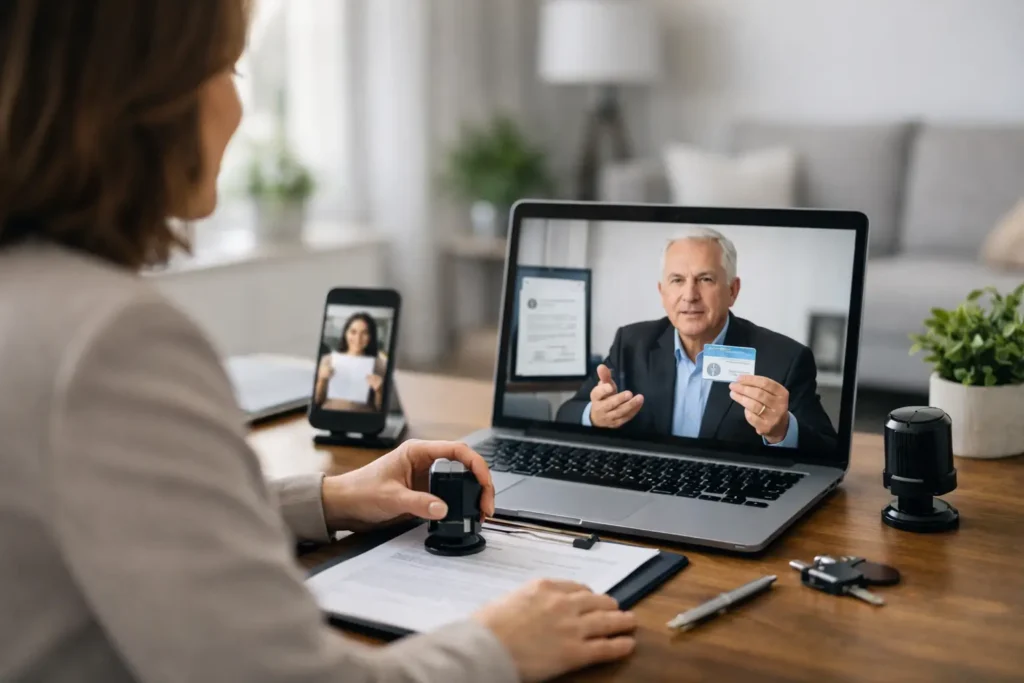
Remote online notarization, often called RON, allows a commissioned notary and signer to meet by live audio-video technology. The notary verifies identity, watches the signing, applies the electronic notarial certificate, and creates the required record of the session. It is not simply emailing a document back and forth. It is a structured process designed to confirm who is signing and that they are doing so willingly.
The Top Benefits of Remote Notarization for Busy Signers
Get documents notarized without traveling
The most immediate benefit is convenience. You can join a remote notarization session from home, your office, a care facility, a hotel, or another location with a reliable internet connection. That saves the time normally spent locating a notary, driving to an office, parking, and fitting the errand into an already crowded day.
This is especially useful when every signer is in a different place. A Reno buyer, an out-of-state co-signer, and a lender working from another market may be able to complete an eligible transaction without coordinating a single physical meeting. The right platform and document process can bring people together much faster than arranging travel.
Remote notarization also gives people with limited mobility a practical option. A signer recovering from surgery, caring for a family member, or unable to leave work may not need to postpone important paperwork just because getting to a notary is difficult.
Respond faster to urgent paperwork
Notarization needs are often time-sensitive. A real estate document may need to be returned before a funding cutoff. A power of attorney, affidavit, business form, or financial document may be needed the same day. With remote online notarization, the process can often move forward as soon as the signer has the document, acceptable identification, and a compatible device.
Speed does not mean skipping the formal requirements. A professional remote notary still needs to verify your identity, confirm that you understand the document, and make sure you are signing voluntarily. What changes is the logistics. Instead of spending hours arranging where everyone will meet, the parties can focus on completing the signing correctly.
For businesses, that faster turnaround can reduce document bottlenecks. Law offices, healthcare teams, lenders, fiduciaries, and financial professionals often lose time when a signed document is waiting on one in-person appointment. A remote option can keep eligible files moving when a physical meeting is not practical.
Serve signers across greater distances
A mobile notary is valuable when you need someone to come to your location in Northern Nevada. Remote notarization solves a different access issue: distance between the signer and the notary. Customers may be away on business, attending school in another state, relocating, or temporarily outside the country.
For eligible U.S. citizens and permanent residents abroad, remote notarization may offer a useful alternative to locating local services or waiting for a consular appointment. The exact availability depends on the document, the signer’s circumstances, and the rules that apply to the receiving party. Still, the ability to meet a qualified notary online can make a major difference when time zones and international travel are involved.
Create a more controlled signing record
A properly performed remote notarization uses more than a video call. Remote notarization platforms typically include identity verification measures, credential analysis, knowledge-based questions when required, an electronic journal entry, and an audio-video recording of the session. These features provide a documented record of how the notarization was completed.
That record can be helpful if a document is later questioned. The notary’s role remains the same at its core: verify identity, observe the signature, and deter fraud or coercion. Remote technology adds layers of documentation around that process.
This does not mean remote notarization is automatically better for every situation. The quality of the process depends on using an authorized platform, following applicable state requirements, and working with a properly commissioned notary. A casual video meeting without the required procedures is not a substitute for a valid remote notarization.
Make scheduling easier for teams and families
Coordinating people is often harder than notarizing the document itself. One signer may work evenings, another may live out of town, and a third may have limited availability during business hours. A remote appointment reduces the need for everyone to reach the same physical location.
This can be particularly valuable for estate planning paperwork, business authorizations, family matters, and multi-party transactions. Each person can join from an appropriate private location, provided the document and applicable rules allow remote notarization. It also gives organizations a more predictable way to handle recurring notarization needs without sending staff away from their worksite.
When Remote Notarization Is the Right Choice
Remote notarization works best when your document is eligible, the receiving organization accepts an electronically notarized document, and you can complete the session privately with stable technology. You will generally need a current government-issued photo ID, an email address, internet access, and a device with a camera and microphone. A larger screen can make reviewing longer documents easier, but many sessions can be completed on a smartphone.
Before scheduling, confirm what the document recipient requires. Some title companies, courts, government offices, foreign institutions, and lenders have their own rules about electronic signatures and remote notarization. A document may be legally eligible for remote notarization but still be rejected by a specific receiving party that requires wet-ink signatures or an in-person notarization.
If you are signing for a real estate transaction, ask your title company or lender early. If you are using the document internationally, ask the receiving authority whether it accepts remote notarization and whether an apostille or additional authentication may be required. Those few questions can prevent a fast signing from becoming a frustrating redo.
When an In-Person Mobile Notary May Be Better
There are times when a mobile notary appointment is the more practical choice. Some documents require original paper signatures, physical witness coordination, or acceptance by an organization that does not allow RON. Other signers may not have dependable internet, a compatible device, or a quiet private setting for an online session.
An in-person appointment can also be preferable when a signer needs extra help handling paper documents or when the parties feel more comfortable meeting face to face. In Reno, Sparks, Carson City, and surrounding communities, a mobile notary can come to a residence, office, hospital, care facility, or other agreed location when remote service is not the right fit.
The best option is not always the newest one. It is the one that meets the document requirements, works for the signer, and can be completed on time.
How to Prepare for a Remote Notary Appointment
Preparation keeps the appointment short and avoids preventable delays. Review the document before the session so you know where signatures and initials are required. Do not sign the portions that must be witnessed by the notary until you are directed to do so during the live meeting.
Have your identification ready and make sure it is unexpired, readable, and available to show on camera. Choose a well-lit private place, charge your device, and use a reliable internet connection. You should also make sure no one is pressuring you to sign. The notary must be able to confirm that you are acting voluntarily and understand the transaction.
If more than one person needs to sign, verify in advance whether each signer must attend the same session and whether witnesses are required. Getting those details settled before the appointment protects your deadline.
Remote notarization is a practical answer when distance, urgency, or mobility stands between you and an important document. Mobile Notary Nation can help you determine whether an online appointment fits your situation or whether a same-day mobile visit is the better path. Have your document requirements ready, confirm acceptance with the receiving party, and choose the notary option that gets the job done correctly without unnecessary delay.