A document deadline feels a lot tighter when you are six or eight time zones away. If you need an online notary for overseas Americans, the main question is not whether remote notarization is convenient. It is whether your specific document, identity, and destination country will allow it. That is where people lose time – not on the notarization itself, but on avoidable surprises.
For Americans living, working, studying, serving, or traveling abroad, online notarization can be a fast solution for powers of attorney, real estate forms, affidavits, consent letters, and many business documents. But it is not a universal fix for every form in every country. The smartest approach is to confirm the rules before your appointment, prepare your ID and technology, and use a provider that can move quickly when the matter is urgent.
How online notary for overseas Americans works
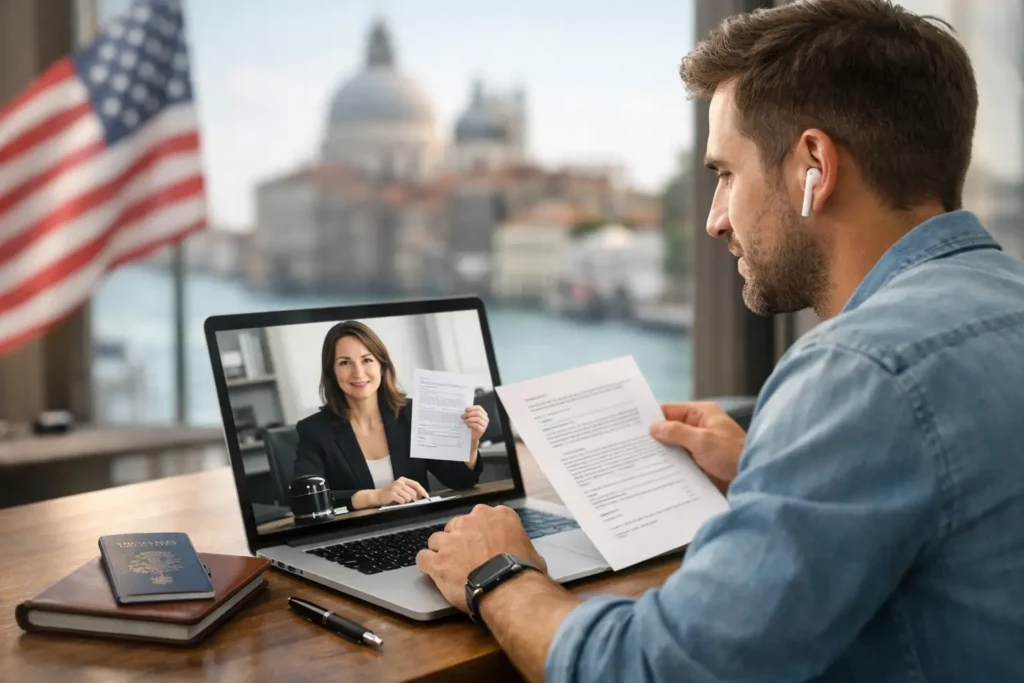
Remote online notarization lets you appear before a commissioned notary by secure audio-video session instead of meeting in person. You upload the document, verify your identity, answer a few required questions, and sign electronically during the session. The notary then completes the notarization and applies the required electronic seal and certificate.
For many overseas Americans, the appeal is obvious. You do not need to locate a nearby embassy appointment, travel to a consulate, or wait for local office hours that may not match your deadline. If you are finalizing a U.S. legal or financial matter from abroad, speed matters.
That said, online notarization depends on eligibility. In many cases, the signer must be a U.S. citizen or lawful permanent resident with acceptable identification and access to a stable internet connection. The document also needs to be suitable for remote notarization under the laws that govern the transaction.
When it is a strong option and when it is not
An online notary is often a strong fit when the document will be used in the United States and the receiving party accepts remote notarization. This commonly includes real estate packages, business authorizations, sworn statements, and certain family or probate documents.
It becomes less straightforward when a foreign authority, foreign land registry, or overseas bank has its own formal requirements. Some institutions still want wet signatures. Others may accept a U.S. online notarization only if the document also goes through apostille or authentication steps. In some cases, they will reject it entirely and require notarization through a consular process or a local civil-law notary.
This is the trade-off people need to hear clearly. Online notarization is fast and highly practical, but acceptance is document-specific. A provider can notarize the document properly and you can still run into trouble if the receiving organization has stricter rules. If the document is high stakes, ask the recipient what they will accept before booking.
Common documents overseas Americans notarize online
Most people seeking remote notarization from abroad are trying to keep a U.S. transaction moving. Real estate is a major example. If you are selling, buying, refinancing, or transferring property while overseas, an online notary may allow you to sign on time without flying back.
Powers of attorney are another frequent request, especially when someone in the U.S. needs authority to act for you on banking, property, or personal matters. Affidavits, parental consent forms, trust-related paperwork, and business documents are also common.
Still, document type matters. Certain original paper documents, forms requiring witnesses under specific state rules, or forms tied to jurisdictions that prohibit remote notarization may need a different process. If your paperwork came from a court, recorder, lender, foreign government office, or title company, it is worth confirming acceptance upfront.
What you need before the appointment
Preparation is usually the difference between a ten-minute appointment and a delayed one. First, make sure your document is complete but unsigned. Most notarized documents must be signed in front of the notary, even during an online session.
Second, have an acceptable unexpired ID ready. A U.S. passport is often the simplest option for Americans abroad, though other government-issued identification may work depending on the platform and legal requirements. Your name on the ID should match the document as closely as possible.
Third, test your technology. You need a device with a camera, microphone, and reliable internet connection. A quiet room with good lighting helps more than people expect. If identity proofing includes knowledge-based authentication, be ready to answer personal history questions drawn from public or credit-related records. That step can trip up signers who recently moved, have thin credit files, or use identity details that do not match U.S. records cleanly.
The biggest issue overseas signers run into
The biggest problem is not usually the notary session. It is identity verification. Some signers assume that being clearly visible on camera with a passport will be enough. Depending on the platform and applicable rules, it may not be. The system may also require credential analysis and authentication questions.
This can be frustrating for Americans who have lived abroad for years, younger adults with limited record history, or people whose records contain outdated addresses. If you think identity proofing may be an issue, raise that concern before the appointment. A responsive provider can often tell you what to expect and whether your situation is likely to qualify.
Why speed matters for overseas document signers
When you are overseas, delays stack up fast. A missed notary session can affect a real estate closing, a probate filing, a school matter, or a business transaction. Time zone gaps make ordinary paperwork harder than it should be.
That is why responsiveness matters as much as the notarization itself. If you are trying to get a power of attorney signed from Europe before a U.S. office opens, or clear a lender condition from Asia before a closing deadline, you need a process that is clear and fast. Mobile Notary Nation is built around that kind of urgency, with remote notarization designed to help qualified customers move documents forward without unnecessary back-and-forth.
Questions to ask before you book
Before scheduling, ask whether your document will be accepted by the receiving party as a remote online notarization. Ask whether witnesses are required and, if so, whether they must be provided by you or can be arranged. Ask what ID is acceptable, whether your location abroad creates any limits, and whether the document may later need apostille or authentication.
These questions are not just procedural. They can save days. The right answer may still be online notarization, but sometimes the honest answer is that a different route is safer.
Online notary for overseas Americans and legal acceptance
Legal acceptance is where nuance matters most. Online notarization may be valid under the notary’s commissioning state law, but the receiving organization still has the final say on whether it will honor the document for its purpose. A county recorder, foreign registrar, private bank, court clerk, or title company may each treat the same notarized document differently.
That is why practical guidance beats guesswork. If the document stays within a U.S. transaction, acceptance is often smoother. If it crosses into a foreign legal system, expect more variables. Neither outcome is unusual.
How to make the process easier on yourself
Start by gathering the final version of your document and checking whether all names, dates, and blanks are correct. Confirm the receiving party accepts remote notarization. Keep your passport or other approved ID nearby, and use a device that you know works well for video calls.
If the matter is urgent, do not wait until the last possible hour to ask questions. Last-minute service can still be possible, but the earlier you confirm requirements, the fewer surprises you will face. A good remote notary process should feel efficient, not confusing.
For Americans abroad, that is the real value of online notarization. It cuts out travel, compresses timelines, and gives you a realistic way to handle serious documents from wherever you are. Just make sure the document qualifies, the recipient will accept it, and your identity verification is set up to succeed. When those pieces are in place, the process can be much faster than most people expect.
If you are overseas and facing a document deadline, clarity is your best advantage – get the requirements confirmed first, then move quickly.