A hospital room is rarely where anyone plans to handle legal paperwork. But when a power of attorney, affidavit, advance directive, or medical document needs to be notarized fast, hospital notary service Nevada families can access becomes more than convenient – it becomes necessary.
The challenge is not just finding a notary. It is finding one who can respond quickly, work professionally in a medical setting, and understand that timing, signer awareness, and hospital logistics all matter. When a patient is admitted, preparing for surgery, or dealing with a sudden change in health, delays can create real stress for families and care teams.
When hospital notary service in Nevada makes sense
Hospital notarizations usually come up when someone cannot travel to a notary office or when the paperwork simply cannot wait. That often includes powers of attorney, healthcare directives, sworn statements, parental consent forms, insurance paperwork, and certain financial documents.
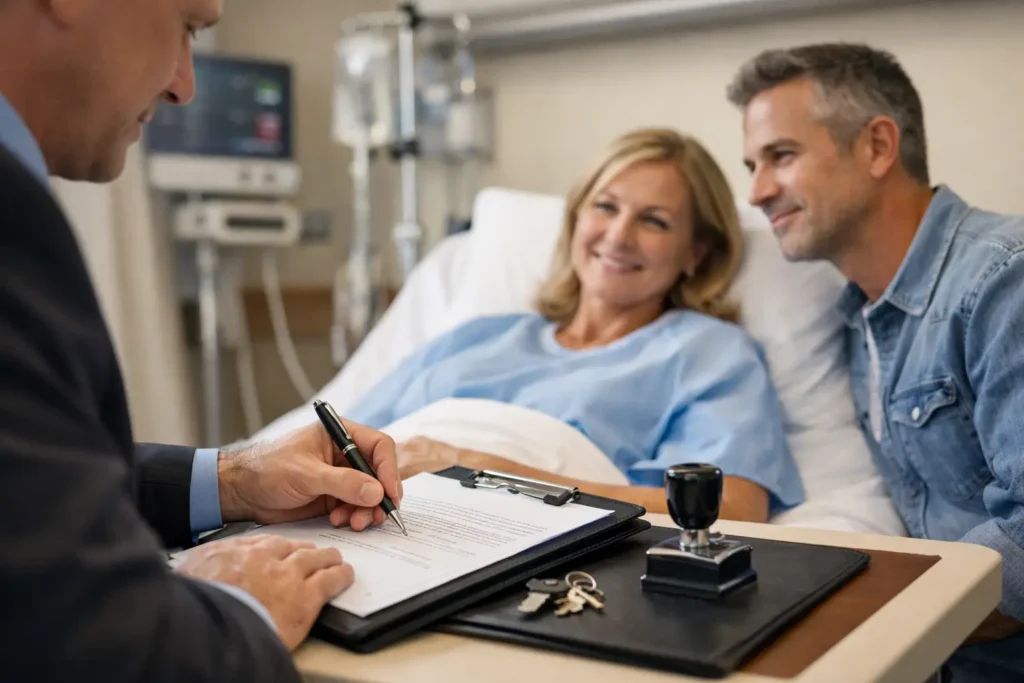
In many cases, the need is urgent but not technically complicated. The signer may be in a room at a hospital in Reno, Sparks, or Carson City and fully able to sign, but they need a commissioned notary to come to them. A mobile notary solves that problem by bringing the service to the bedside instead of forcing the patient or family to coordinate transportation, discharge timing, or office visits.
That said, hospital work is different from a standard mobile appointment at a home or office. Medical staff schedules, visitor policies, patient condition, and identification issues can all affect whether the notarization can happen right away.
The first issue is always signer awareness
For any hospital notary service Nevada residents request, the most important requirement is simple: the signer must be aware, willing, and able to communicate. A notary cannot decide legal capacity, give legal advice, or notarize a signature if the patient does not understand what they are signing.
This is where families sometimes run into frustration. They may be under pressure and assume a notary can complete the document because the paperwork itself is ready. But if the patient is heavily medicated, unconscious, confused, asleep, or unable to communicate clearly, the notarization may have to wait.
That is not a notary being difficult. It is the notary doing the job correctly.
A good mobile notary will assess the situation respectfully on arrival. If the signer can answer basic questions, appears to understand the document at a general level, and is signing willingly, the appointment may move forward. If not, the notary may need to stop the process. It depends on the condition of the signer at that moment, not on how urgent the family feels the paperwork is.
ID problems are common in hospitals
The second issue is identification. Nevada notaries generally need satisfactory proof of identity before notarizing a signature. In a hospital, that can be harder than people expect because patients are often admitted without a wallet, purse, or full set of documents nearby.
Before booking a hospital appointment, it helps to confirm that the signer has an acceptable, unexpired photo ID available. If the ID is at home, a family member may need to retrieve it before the appointment. If the signer does not have acceptable ID, there may be other lawful options depending on the situation, but those need to be discussed in advance rather than figured out in the hallway.
This is one reason speed matters, but preparation matters too. The fastest appointment is still delayed if the notary arrives and the signer cannot be identified.
What families should do before the notary arrives
Hospital notarizations go much smoother when someone handles a few details ahead of time. The document should be printed and complete, with any blanks filled in except for the signature if the document requires signing in front of the notary. The signer should have ID ready. The room number, hospital name, parking instructions, and any visitor restrictions should be confirmed before the notary is dispatched.
It also helps to know exactly what type of notarization is needed. Some documents require an acknowledgment. Others require a jurat, which involves an oath or affirmation. If you are not sure, the safest move is to ask the document preparer or receiving agency before the appointment. A notary can explain the difference between notarial acts, but cannot choose for you if the document does not specify and you are asking for legal direction.
If witnesses are required, that should also be addressed before arrival. Not every hospital staff member can serve as a witness, and a notary is not automatically a witness unless the document and circumstances allow it. This detail can slow down an otherwise simple appointment.
Why mobile service matters in a hospital setting
A fixed office notary works fine when life is normal. Hospitals are not normal environments. Families are coordinating doctors, nurses, discharge planning, pharmacy calls, and emotional decisions, often all in the same day. In that situation, mobile service is not a luxury. It removes friction at the exact point where delays cause the most pressure.
That is especially true for same-day requests. If a patient has a narrow window where they are alert and available, waiting until tomorrow may not be realistic. A responsive mobile notary can meet the signer where they are and work around the realities of the hospital instead of adding another obstacle.
For people in Northern Nevada, this can make a major difference. Whether the request comes from a family member, a case manager, or a legal professional coordinating documents for a client in care, a mobile notary who travels to hospitals can save hours and reduce avoidable stress.
Remote online notarization is useful, but not always the answer
Some customers assume remote online notarization is the easiest option for every urgent document. Sometimes it is. If the signer is alert, has the right technology, can pass identity verification, and the document is eligible for remote notarization, online service can be very efficient.
But hospitals can make that difficult. Patients may not have access to a laptop, stable internet, valid ID on hand, or the ability to complete identity checks on a device. Even when remote notarization is legally available, bedside conditions may make an in-person mobile appointment the better choice.
This is where practical guidance matters more than theory. The best option depends on the signer’s condition, the document type, and how quickly the notarization needs to happen.
What professional hospital notary service should look like
Hospital appointments require calm communication, clear expectations, and fast coordination. The notary should be direct about what is needed, honest about what can and cannot be done, and responsive enough to handle time-sensitive requests without creating confusion.
That means confirming the basics before arrival, showing up prepared, and avoiding surprises about identification, payment, witnesses, or document readiness. It also means respecting the setting. A hospital room is not a routine business stop. Professionalism matters even more there.
For healthcare staff and repeat business users, reliability is often the deciding factor. A law office, social worker, fiduciary, or medical discharge planner does not need vague availability. They need to know whether a notary can respond, what the process will require, and how soon the paperwork can be completed.
That practical, service-first approach is exactly why businesses and families use mobile providers like Mobile Notary Nation when timing is tight and the signer cannot leave the facility.
How to avoid a failed hospital notarization
Most failed appointments come down to three issues: the signer is not aware enough to proceed, valid ID is missing, or the wrong expectations were set before the visit. These problems are common, but many are preventable.
If the signer is likely to be groggy after medication or surgery, try to schedule during a time when they are usually most alert. If the ID is not in the room, get it there before the appointment. If the document is incomplete, finish the non-signature sections in advance. And if you do not know whether witnesses are needed, clarify that before the notary is on the way.
A little preparation can turn a high-stress request into a straightforward bedside appointment.
Getting help fast when the paperwork cannot wait
When someone needs hospital notary service Nevada families can rely on, the real priority is not finding the cheapest or closest option. It is finding a notary who answers quickly, understands hospital constraints, and can tell you right away whether the appointment is likely to work.
That kind of clarity saves time. It also helps families make better decisions under pressure. If the signer is ready, the document is prepared, and the ID is available, a mobile hospital notarization can often be handled without adding another difficult layer to an already hard day.
When paperwork has to be done in a hospital, speed matters. But clear communication matters just as much, and that is often what turns an urgent request into real progress.