A last-minute notarization can come to a stop for one simple reason: the signer does not have acceptable identification. Whether you need a power of attorney notarized at a hospital, closing documents signed at home, or a remote online appointment completed from another state, notary identification requirements are the first detail to handle.
Bring your original, valid photo ID to the appointment. Do not assume a photo on your phone, an expired license, or a document with your name on it will be enough. A notary must be able to verify who is signing before completing the notarial certificate.
Notary Identification Requirements in Plain English
A notary’s role is to confirm the identity of the person signing, determine that the person appears willing to sign, and make sure the signer seems aware of what they are doing. Identity verification is not optional. It protects the signer, the receiving organization, and the document from fraud.
In Nevada, a notary generally needs satisfactory evidence of a signer’s identity. The most direct way to provide that evidence is with a current government-issued identification document that includes a photograph, signature, and identifying information. The notary will compare the ID photo to the person in front of them, review the name, and record the required details in the notarial journal when applicable.
The name on your ID should reasonably match the name you will sign on the document. Small differences can sometimes be explained, but a major mismatch can delay the appointment. For example, a document prepared in a married name and an ID still showing a maiden name may require additional documentation or a correction to the document before notarization can proceed.
Acceptable Identification for a Notary Appointment
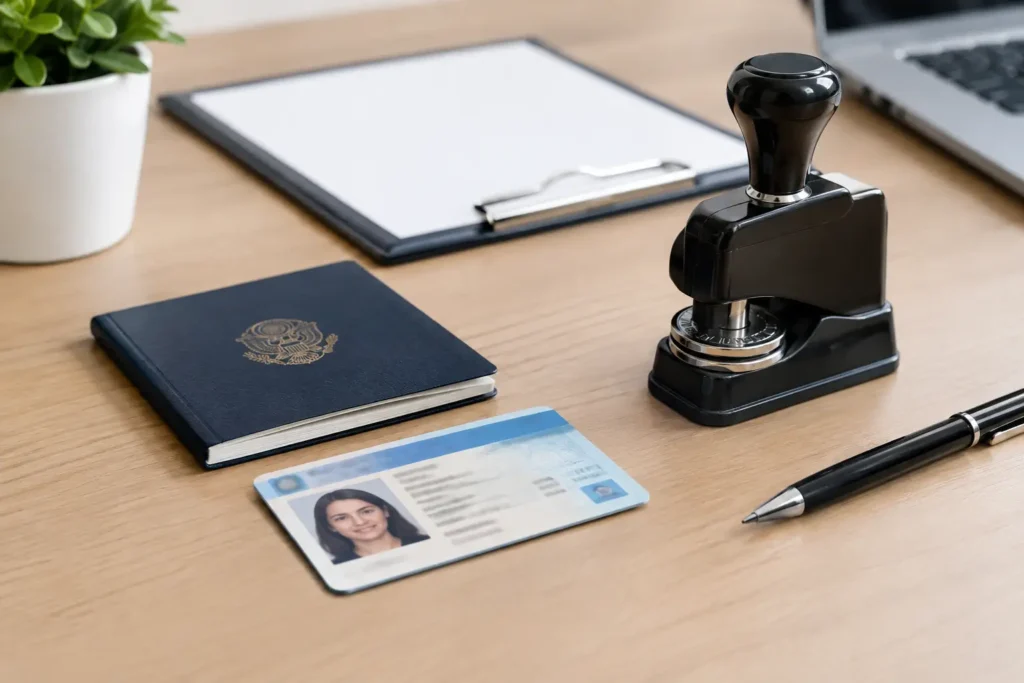
A current state driver’s license or state identification card is usually the easiest option. A U.S. passport is also commonly accepted and can be particularly useful when a signer has recently moved, does not drive, or has an out-of-state license. Certain military IDs and qualifying foreign government-issued passports may also be acceptable, depending on the document’s features and the circumstances of the notarization.
The key point is that the ID must allow the notary to make a reliable identification. Bring the physical original, not a copy, scan, screenshot, or photo. If you have more than one form of identification available, bringing both can prevent an unnecessary delay when there is a name variation, a damaged card, or another question about the document.
Documents that usually do not establish identity by themselves include a Social Security card, birth certificate, credit card, utility bill, employee badge, insurance card, or a temporary paper license without adequate identifying features. These documents may help explain a name or address issue, but they are not a replacement for satisfactory photo identification.
Do Not Rely on an Expired ID
An expired ID is one of the most common appointment problems. Some identification documents may remain usable for a limited period after expiration under applicable state rules, but that depends on the type of ID, the expiration date, and the facts of the appointment. It is never a good idea to assume an expired card will be accepted.
If your driver’s license is expired, bring a current passport or another current government-issued photo ID if you have one. If you only have expired identification, contact the notary before the appointment rather than waiting until signing time. There may be an alternative, but it must be confirmed before the notarial act begins.
What if You Do Not Have Acceptable ID?
A credible identifying witness may be an option in certain situations. This is not simply a friend who says they know you. The witness must meet the legal requirements, be personally known to the notary or present acceptable identification, and swear or affirm that they know the signer. The witness also must be credible and have no disqualifying interest in the transaction.
This option can be helpful for someone in a care facility, a person whose wallet was lost or stolen, or a signer who cannot obtain a replacement ID before an urgent deadline. It is not available for every document or every circumstance. The organization receiving the paperwork may have its own rules that are stricter than the notary’s requirements.
Call ahead if you think a credible witness may be necessary. The notary needs to know the situation in advance so the right people and identification can be present. Waiting until a real estate closing, medical discharge, or court deadline to raise the issue can put the entire transaction at risk.
Bring More Than ID When Names Do Not Match
Your identification is central, but supporting records may be helpful when your legal name has changed or the document contains a variation. A marriage certificate, divorce decree, court-ordered name change, or other official record may help clarify why the names differ. These records do not automatically replace acceptable ID, but they can help the signer, document preparer, title company, lender, or attorney resolve a discrepancy.
Do not alter the document yourself to force it to match an ID. A misspelled name, incorrect middle initial, or outdated name should be addressed by the party that prepared the document. For many transactions, especially deeds, loan packages, estate documents, and healthcare directives, the receiving party should confirm exactly how the signer must be named and how the signature should appear.
Remote Online Notarization Has Its Own ID Check
Remote online notarization is convenient, but the identification process is not casual. The signer appears through secure audio-video technology and completes identity verification electronically. This generally involves presenting qualifying government-issued photo ID to the platform, answering knowledge-based or credential-based verification questions when required, and completing a recorded session.
A stable internet connection, a device with a camera and microphone, and an original acceptable ID are essential. Poor lighting, a blurry camera, a damaged ID, or a name mismatch can prevent the platform from verifying the signer. Set up in a quiet, well-lit place and have your document ready before the session starts.
Remote online notarization can be a strong option for busy professionals, people traveling outside Nevada, and eligible U.S. citizens or permanent residents abroad. However, the receiving agency, lender, court, or foreign authority must be willing to accept an electronically notarized document. Some documents and transactions still require an in-person signing, original wet signatures, witnesses, or specialized closing procedures.
Identification Is Only One Part of a Valid Notarization
Having proper ID does not guarantee that every document can be notarized. The signer must personally appear, whether in person or through a properly conducted remote online session. The signer must be able to communicate directly with the notary and appear to understand the document and the act of signing.
The notary also cannot notarize a signature if the signer is being pressured, appears confused about the transaction, or cannot communicate a willingness to sign. A family member, caregiver, colleague, or agent cannot sign for another adult merely because it is more convenient. Documents involving powers of attorney, trusts, healthcare decisions, and property transfers deserve particular care because the consequences can be significant.
Bring the complete document, including every page and the notarial certificate page. Do not sign a jurat or other document that requires signing in the notary’s presence before the appointment. For an acknowledgment, you may be able to acknowledge a signature already placed on the document, but confirm the requested notarial act first. If witnesses are required, make sure they are available and meet the receiving party’s requirements.
A Fast Appointment Starts Before the Notary Arrives
Before scheduling, check four things: your physical government-issued photo ID, the exact name on the document, whether witnesses are required, and whether the receiving party accepts remote online notarization if you prefer an online session. This takes only a few minutes and prevents the most common reasons appointments must be rescheduled.
For urgent mobile appointments in Reno, Sparks, Carson City, Henderson, Summerlin, Las Vegas, and nearby communities, Notary Nation can help confirm what to have ready before the notary arrives. If your ID is expired, your name differs from the document, or you need a credible witness, raise that issue when requesting service.
The best time to solve an identification problem is before the signer, witnesses, lender, attorney, or family members are waiting. Have the right ID in hand, ask questions early, and your notarization can move forward with the speed your deadline demands.