You can have the right document, the right signature, and the right deadline – and still get turned away if your identification does not meet notary requirements. That is why one of the most common questions people ask before an appointment is what ID is accepted for notarization.
The short answer is this: a notary usually needs a current, government-issued photo ID that clearly shows your name, photo, signature, and physical description or identifying details. But the real answer depends on the state, the type of notarization, and whether you are signing in person or online. If you are trying to get something notarized quickly, knowing the difference ahead of time saves time, repeat appointments, and unnecessary stress.
What ID is accepted for notarization in most cases?
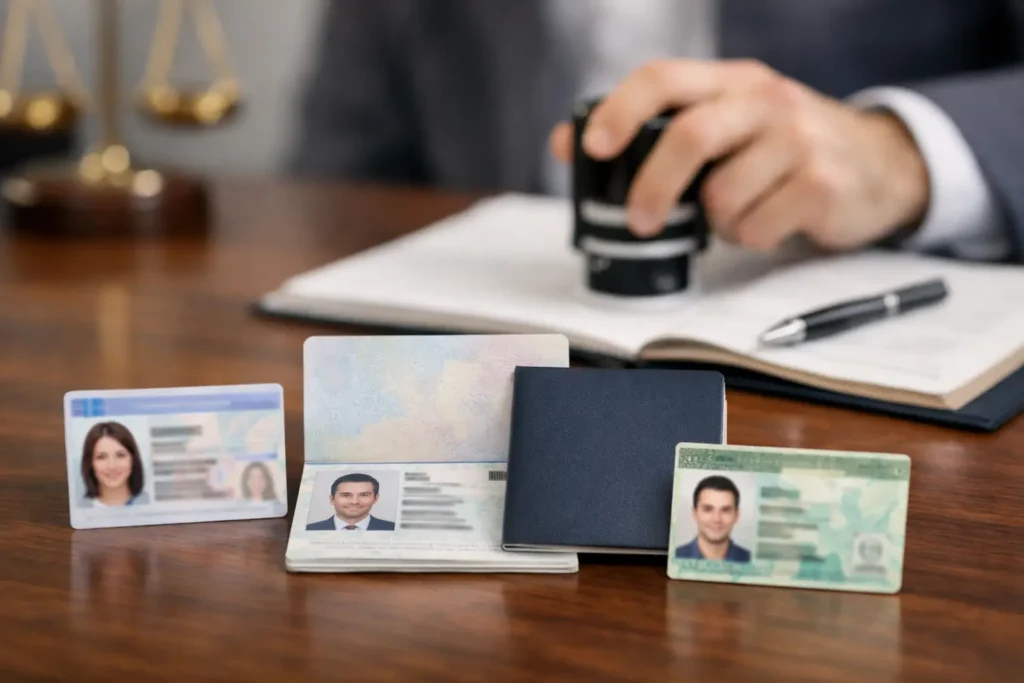
In most standard notarizations, the safest form of identification is an unexpired driver’s license, state ID card, U.S. passport, or another government-issued ID that includes a photograph and signature. These are the forms of ID notaries see every day, and they are typically the easiest to verify.
A military ID may also be accepted in many situations. Permanent resident cards can work too, depending on the state and whether the ID contains the required identifying information. Some states allow a recently expired ID within a limited grace period, while others do not. That is where people run into trouble. They assume a valid-looking ID is enough, but the notary must follow the rules of the commissioning state, not personal judgment.
For a signer, the practical rule is simple: bring the most current government-issued photo ID you have. If you have more than one, bring a backup. That extra step can prevent a last-minute problem if one ID raises a question.
Why notaries are strict about identification
A notary is not there just to stamp paper. The notary’s job is to verify identity, confirm willingness, and help deter fraud. If the notary cannot reasonably confirm that you are the person named in the document, the notarization should not move forward.
That is why expired IDs, damaged IDs, photocopies, and incomplete documents often get rejected. Even if the person standing in front of the notary is obviously the signer, the legal standard is about satisfactory evidence of identity. The notary needs more than a gut feeling.
For business and legal documents, that standard matters even more. Real estate packages, powers of attorney, healthcare forms, affidavits, and court-related paperwork can all carry serious legal consequences. A notary who cuts corners on ID creates risk for everyone involved.
Common IDs that are usually accepted
The most commonly accepted IDs are straightforward. A current state-issued driver’s license is often the first choice. A state identification card is also widely accepted, especially for people who do not drive. A U.S. passport book or passport card is another strong option because it is federally issued and widely recognized.
Depending on the state, other acceptable IDs may include a U.S. military ID, a permanent resident card, or certain foreign passports. Some states also permit IDs issued by federally recognized tribal governments.
The key detail is not just who issued the ID. The ID usually needs to be current or otherwise allowed by state law, and it should be in good enough condition to read clearly. If the photo is faded, the card is cracked, or the signature is missing, the notary may have to refuse it.
IDs that often cause problems
People are often surprised by what does not work. A Social Security card is not enough. A birth certificate is not enough. A work badge, school ID, warehouse badge, gym membership, or Costco card will not satisfy a notary’s identification requirement.
A photocopy or picture of your driver’s license on your phone also usually will not work for in-person notarization. The notary generally needs to inspect the actual physical ID. Even if the image is clear, a copy does not provide the same security features and can be easier to alter.
Another common problem is an expired driver’s license. Some customers assume a notary can accept it because other places still do. Not necessarily. In many cases, an expired ID means the notarization stops right there unless another permitted method of identification is available.
What if you do not have an acceptable photo ID?
This is where the answer becomes more state-specific. In some states, a credible witness or two credible witnesses may be used if the signer lacks acceptable identification. A credible witness is a person who personally knows the signer and can swear to the signer’s identity before the notary.
That said, this is not a universal fix. States differ on whether credible witnesses are allowed, how many are required, whether the witnesses must know the notary, and what identification the witnesses themselves must provide. If you are counting on this option, it is smart to confirm it before the appointment instead of hoping it can be worked out on the spot.
For urgent notarizations, this matters a lot. If a hospital form, power of attorney, or court filing has a deadline, the wrong assumption about identification can waste precious time.
What ID is accepted for notarization online?
Remote online notarization adds another layer. If you are signing online, you still need acceptable identification, but the verification process usually includes technology-based identity checks in addition to reviewing your ID.
In many online notarizations, you will be asked to upload a picture of your government-issued ID and complete identity proofing questions based on your personal history. The exact process depends on the platform and the state’s laws. A current driver’s license, state ID, or passport is often the easiest route for online notarization as well.
Not every ID that might work in person will work smoothly online. Some systems are better at scanning certain IDs than others. If the image is blurry, the lighting is bad, or the ID is too worn to read, the system may reject it before the notary even joins the session.
For customers using remote online notarization from home, the practical move is to test your camera, have your ID ready, and make sure the name on the document matches the ID as closely as possible.
Name mismatches can delay the appointment
Even with a valid ID, a mismatch between the document name and the identification can create delays. If your ID says Jennifer A. Smith and your document says Jenny Smith, the notary may need clarification or may be unable to proceed, depending on the gap between the names and the document requirements.
This comes up often after marriage, divorce, or a recent legal name change. If your name has changed and your ID has not been updated, bring any supporting documents you have, but understand that supporting documents do not automatically replace valid identification. The notary still has to work within legal standards.
If you are preparing a time-sensitive document, review the name line before the appointment. Catching a mismatch early is easier than fixing it while everyone is waiting.
Special situations: seniors, hospital signers, and urgent documents
Identification issues are especially common in hospitals, nursing facilities, and emergency situations. A signer may be fully aware and willing to sign, but if their ID is missing, expired, or inaccessible, that becomes a real obstacle.
This is one reason mobile notary services are often called for urgent situations. The convenience of traveling to the signer helps, but it does not remove the ID requirement. Families should gather identification before the notary arrives whenever possible. If there is concern about whether the available ID will work, ask ahead. A quick confirmation can prevent a failed visit.
For seniors who no longer drive, a state identification card is often the best replacement for an old driver’s license. For frequent signers, keeping that ID current is one of the easiest ways to avoid delays on future legal or medical paperwork.
How to avoid getting turned away
If your appointment matters, treat ID as the first thing to verify, not the last. Use a current government-issued photo ID whenever possible. Make sure it is readable and physically available. Check that the name on the document is close enough to the name on the ID. If your situation is unusual, ask before scheduling or before the notary is dispatched.
That is especially helpful for mobile and same-day requests, where time matters and missed appointments are costly. A fast notarization starts with being ready.
At Mobile Notary Nation, that is often the difference between getting your documents completed on the first visit and losing valuable time trying to fix preventable issues. If you are unsure whether your ID will work, ask first, bring the best ID you have, and give yourself the best chance of finishing the notarization without delays.
When the paperwork is urgent, the smoothest appointment usually comes down to one simple thing: showing up with identification the notary can actually accept.